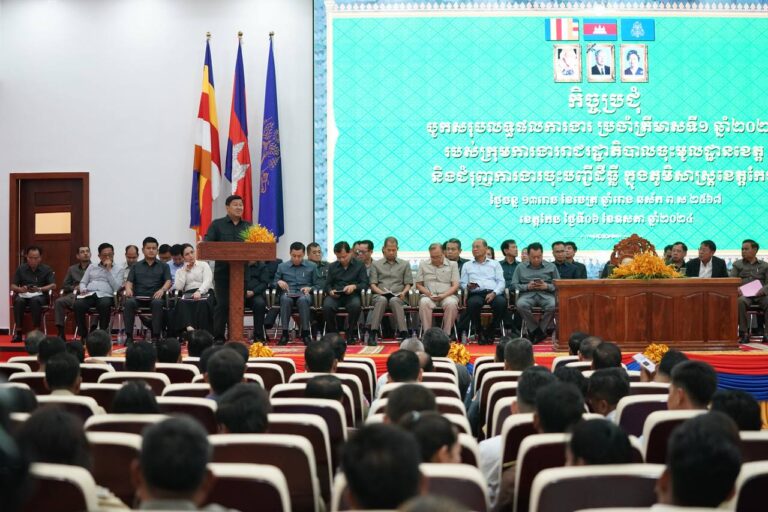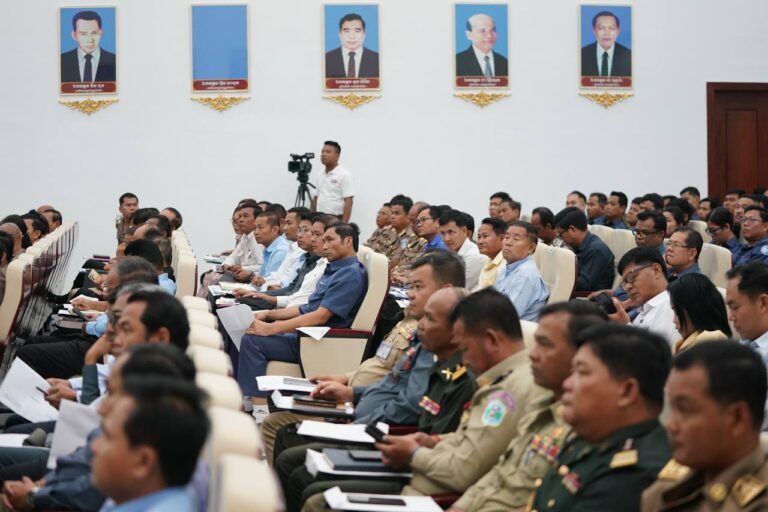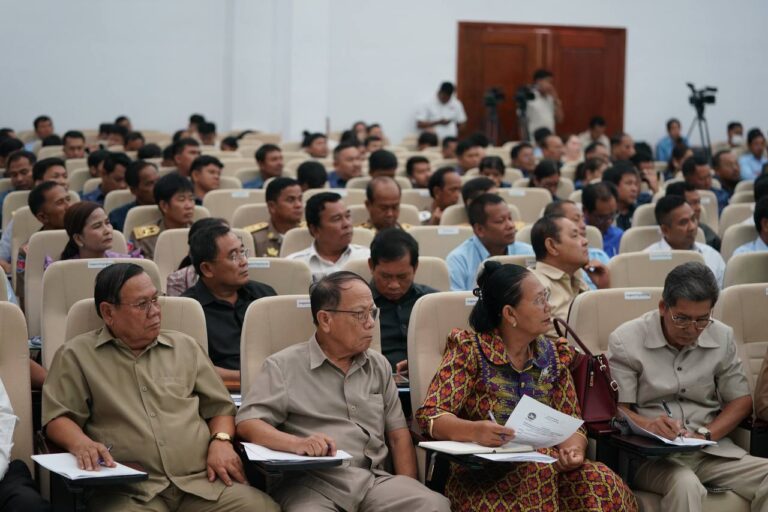
(Kep): The leadership of the Ministry of Land Management, Urban Planning and Construction noted that Kep, Kampot, Sihanoukville and Koh Kong provinces have been consistently implementing the first phase of the Pentagon Strategy on the six priority policies and five key measures of the Royal Government.
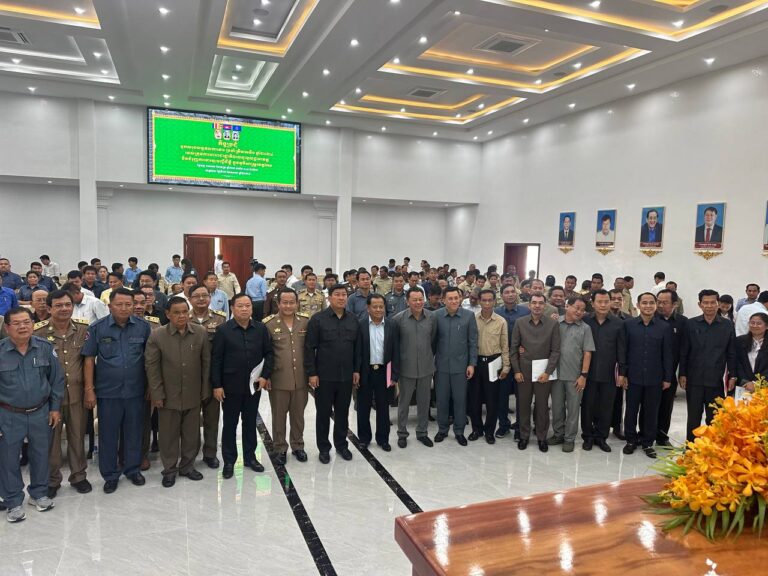
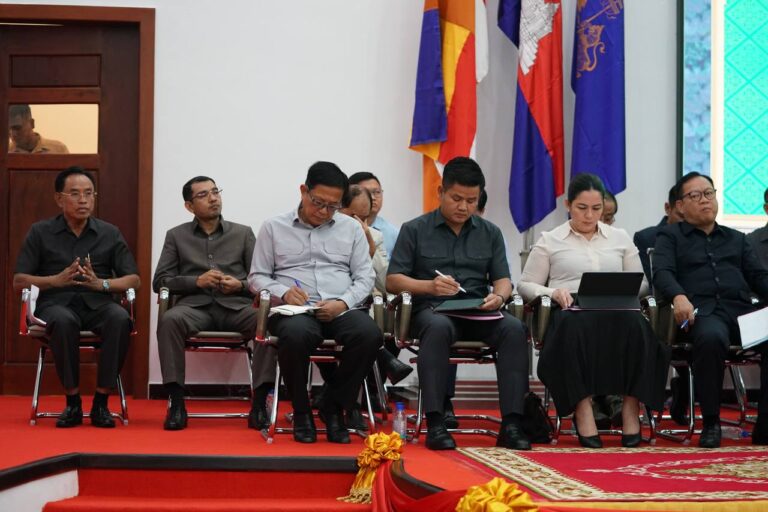
His Excellency Deputy Prime Minister Say Samal spoke at the meeting to summarize the results of the first quarter of 2024 of the Royal Government Working Group on Provincial Land Registration and Promoting Land Registration in the Geography of Kep Province on the morning of May 6, 2024 at Kep Provincial Hall.
His Excellency the Deputy Prime Minister observed that currently, the territorial authorities, city and district councils in Kep province have worked together to improve the infrastructure in Kep province in accordance with the correct strategy and the potential of the province to transform this province into the most attractive coastal city in the Kingdom of Cambodia. His Excellency hopes that everyone will continue to work hard to implement this work further, aiming to promote Kep province to gain more prominence to attract more tourists and improve the lives of the people in this province.
At the same time, His Excellency considered the land management, urban planning and construction sectors as important parts of the unified administration of the capital, provinces, cities, districts and khans, and land management and land registration work must have the agreement and cooperation of all relevant parties and the support of officials as executives and the participation of the citizens so that the work is smooth and efficient.
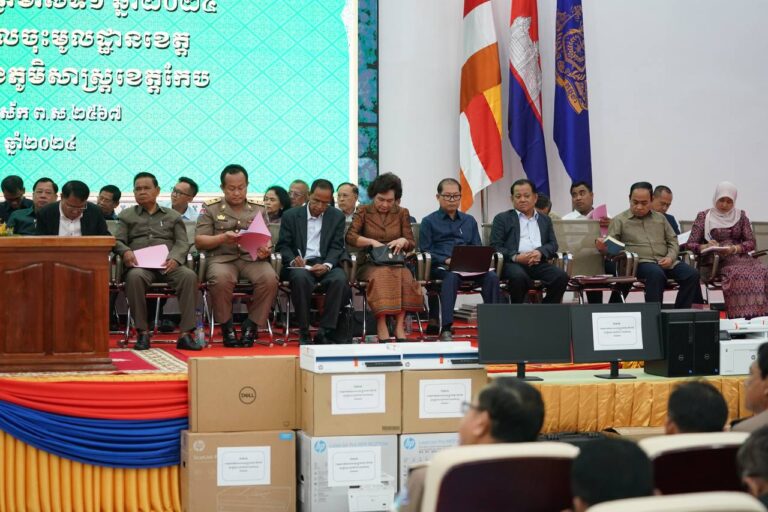
On that occasion, His Excellency the Deputy Prime Minister also handed over equipment to the Department of Land Management, Urban Planning, Construction and Cadastre of Kep Province to promote land registration work, including: 2 desktop computers, along with equipment for 2 printers and 2 scanners.
It is worth noting that the Pentagon Strategy, Phase 1 of the Royal Government of the 7th term of the National Assembly will promote the implementation of 6 priority policy programs, including:
(1). Expanding health care services towards universal health coverage;
(2). Vocational and technical training for young people from poor and vulnerable families across the country;
(3). Establishing a national social assistance program for poor families, vulnerable groups in poor families, and families at risk in times of economic crisis and emergency;
(4). Introducing a strategy on developing the informal economy to enable them to participate in the formal economy and benefit from the formal social protection system;
(5). Introducing a coordination mechanism and financing program to promote production, find markets, and maintain reasonable prices for key agricultural products; and
(6). Deploying agricultural technical officers to all communes and sangkats with agricultural activities throughout the country and organizing farmers’ associations in rural areas.
At the same time, the Royal Government has also introduced five key measures to address the challenges, including: Strengthening public administration capacity, focusing on strengthening the quality, efficiency, and effectiveness of officials and institutions; Improving the quality of education, focusing on strengthening the quality of public schools from kindergarten to secondary school; Improving the quality of health services, focusing on strengthening the capacity to provide primary health services at the grassroots level; Strengthening the implementation of the “Safe Villages, Communes, and Sangkats” policy, with a special focus on reducing and eventually eliminating drug trafficking and use in the community; and strengthening and improving the quality and efficiency of the justice system.