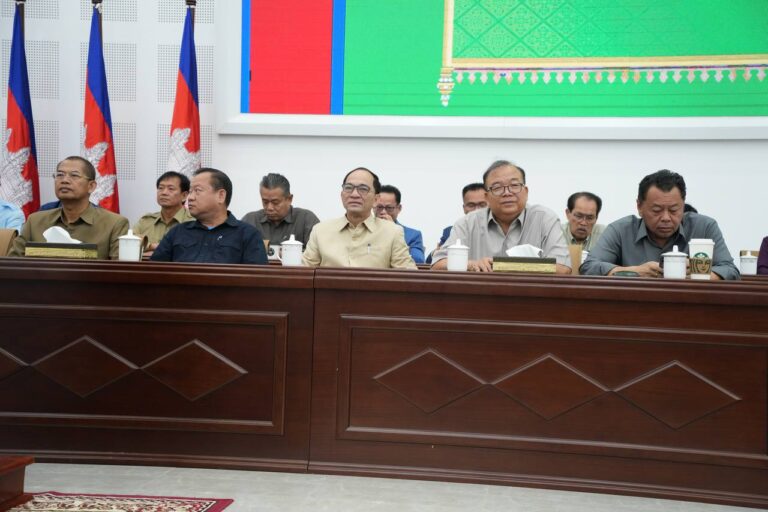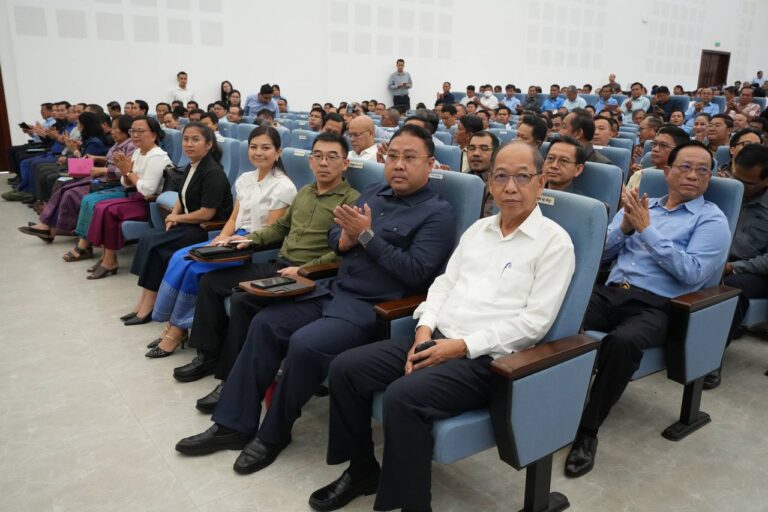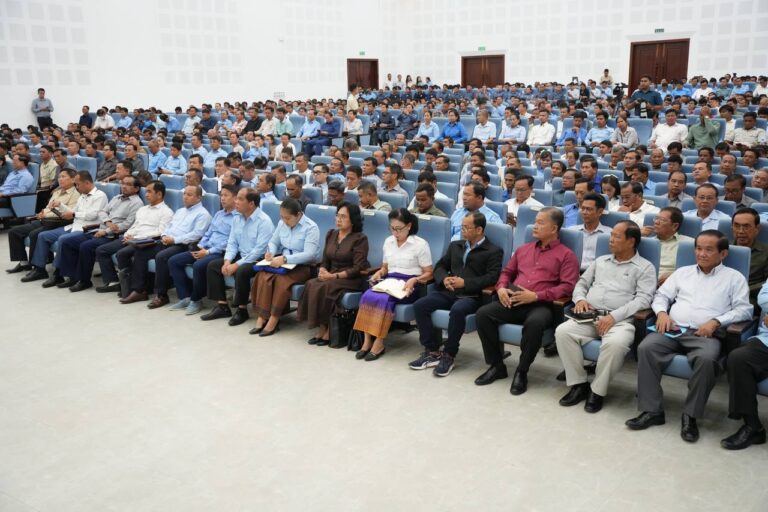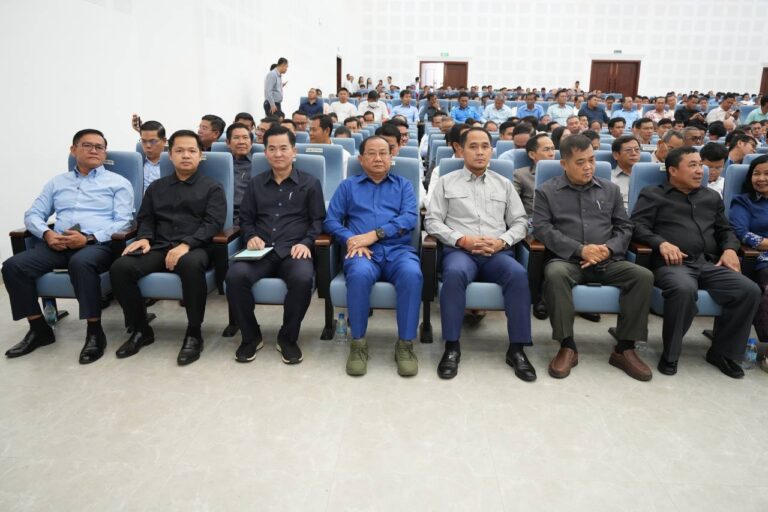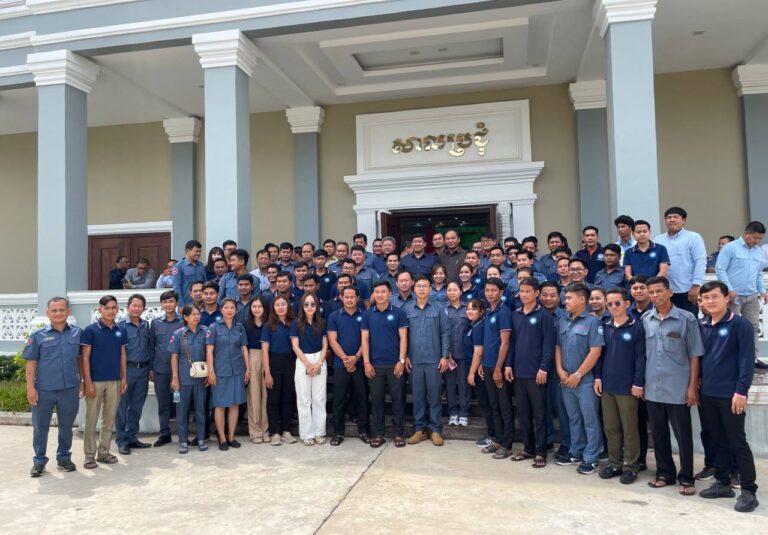
(Sihanoukville): The leadership of the Ministry of Land Management, Urban Planning and Construction has considered Sihanoukville Province to be a leading province in supporting economic development in the region and the Cambodian coastal economic corridor with the consistent implementation of the first phase of the Pentagon Strategy on the six priority policies and five key measures of the Royal Government.
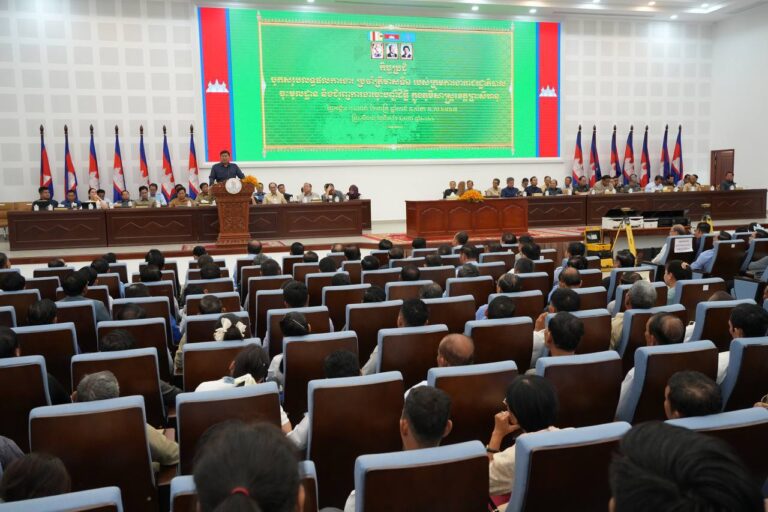
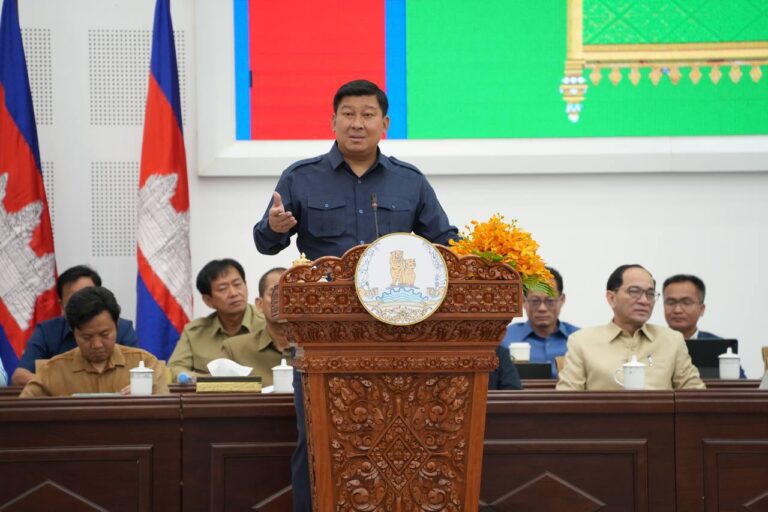
His Excellency Deputy Prime Minister Say Samal spoke at the meeting to summarize the results of the first quarter of 2024 of the Royal Government Working Group on Provincial Registration and Promoting Land Registration in the Geography of Sihanoukville Province on the morning of May 7, 2024.
His Excellency pointed out that the city planning should be prepared to a common standard by considering public spaces, with pedestrian paths for citizens to exercise for health, trees, and greenery, so that in the future the city will be more beautiful, attractive, comfortable, and easy to live in.
His Excellency Say Samal also urged the provincial authorities to consider and pay attention to maintaining better security and safety for citizens as well as national and international tourists who come to visit or invest in Sihanoukville Province.
From January 1 to May 3, 2024, land registration work was systematic in the geography of Preah Sihanouk Province, measuring 11,819 parcels of land, equivalent to 13 villages, collecting data on 10,948 parcels of land, entering data on 10,622 parcels of land, and publishing 834 parcels of land.
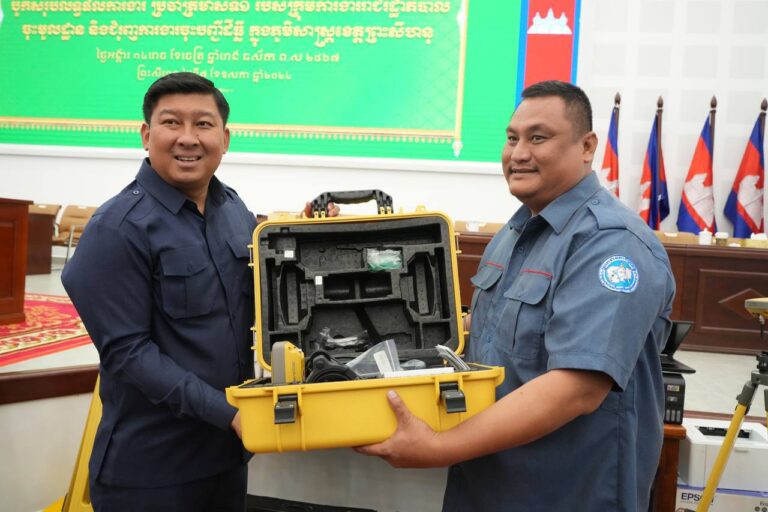
To continue promoting land registration work, His Excellency handed over equipment to the Department of Land Management, Urban Planning, Construction and Cadastre of Preah Sihanouk Province, including: 4 desktop computers and 7 laptops, along with equipment and 6 scanners.
Please note that the 6 priority policies of the 7th mandate of the Royal Government include:
(1). Expanding health care services towards universal health coverage;
(2). Vocational and technical training for young people from poor and vulnerable families across the country;
(3). Establishing a national social assistance program for poor families, vulnerable groups in poor families, and families at risk during economic crises and emergencies;
(4). Introducing a strategy on informal economic development to enable them to participate in the formal economy and benefit from the formal social protection system;
(5). Introducing a coordination mechanism and financing program to promote production, find markets, and stabilize prices of key agricultural products at reasonable levels; and
(6). Deploying agricultural technical officers to all communes and sangkats with agricultural activities throughout the country and organizing farmers’ associations in rural areas.
At the same time, the Royal Government has also introduced five key measures to address the challenges: (1) Strengthening public administration capacity, focusing on strengthening the quality, efficiency, and effectiveness of officials and institutions; (2) Improving the quality of education, focusing on strengthening the quality of public schools from kindergarten to secondary school; (3) Improving the quality of health services, focusing on strengthening the capacity to provide primary health services at the grassroots level; (4) Strengthening the implementation of the “Safe Villages, Communes, and Sangkats” policy, with special attention paid to reducing and ultimately eliminating drug trafficking and use in the community; and (5) Strengthening and improving the quality and efficiency of the justice system.